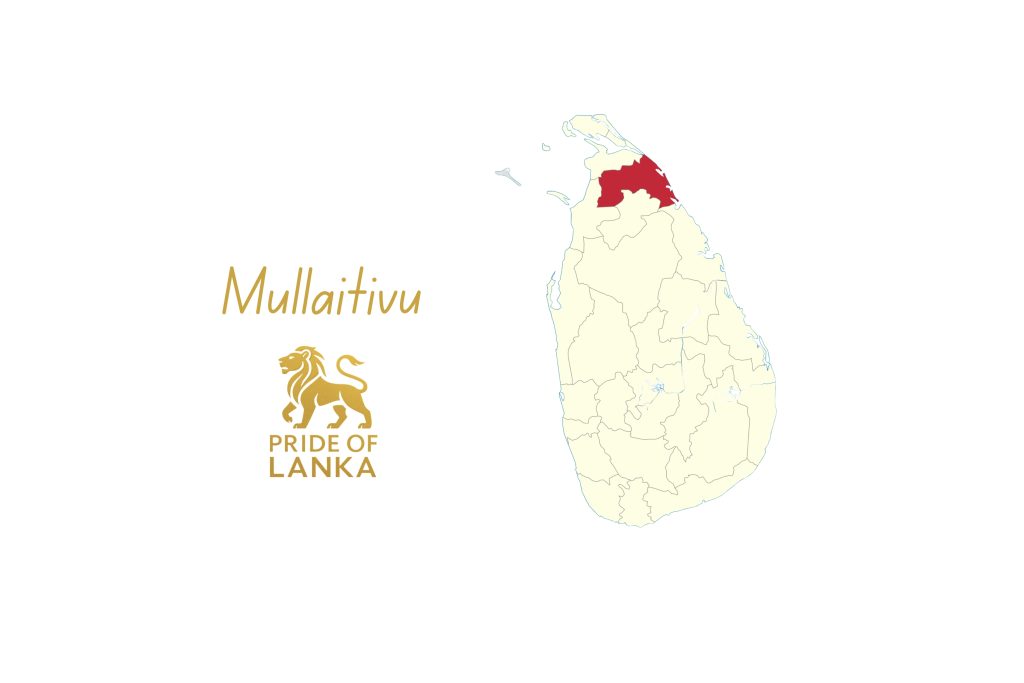
Mullaitivu District stretches along Sri Lanka’s north eastern coast, where the Indian Ocean meets wide lagoons, dense forests, and long, open beaches. It is a land shaped by water, sand, and wind, and also by one of the most difficult chapters in the country’s recent history.
Today, Mullaitivu stands as a district of recovery, natural beauty, and steady rebuilding, where life is returning to fields, schools, fishing harbors, and village streets with patience and resilience.
A Landscape of Sea, Lagoons, and Forests
Mullaitivu has one of the longest and least disturbed coastlines in Sri Lanka. Its geography is dominated by sandy beaches, shallow seas, lagoons, and forested inland areas. The Nanthi Kadal Lagoon and several other water bodies shape both the landscape and the livelihoods of the people.
The district lies close to major forest and wildlife areas and forms part of important ecological corridors in the Northern and North Central regions. Its ecosystems support fisheries, agriculture, and a wide variety of bird and animal life.
Fishing, Farming, and Rural Livelihoods
The sea is central to Mullaitivu’s economy. Fishing is the main livelihood for many coastal communities, with lagoon fishing and deep sea fishing both playing important roles.
Inland, agriculture is based on paddy cultivation and other field crops supported by tanks and seasonal rains. Coconut and palmyrah also form part of the local rural economy.
The district’s economy is still largely rural and community based, with small scale trade and services gradually expanding.
History, Loss, and the Long Road Back
Mullaitivu is closely associated with the final phase of Sri Lanka’s long conflict and carries deep memories of loss, displacement, and destruction. Large parts of the district were severely affected, and normal life was disrupted for many years.
Since the end of the conflict, the district has been engaged in a slow but determined process of rebuilding. Roads, schools, hospitals, and public institutions have been restored. Fishing harbors and farming lands have been re opened. Families have returned and communities are gradually re forming.
Communities and Social Life
Mullaitivu is predominantly Tamil, with a strong village based social structure. Temples, schools, and local associations play a central role in community life.
The district’s social character is marked by solidarity, patience, and a strong desire for stability and normalcy after years of uncertainty.
Nature, Memory, and Reflection
Mullaitivu’s quiet beaches and wide open spaces give the district a reflective and almost contemplative atmosphere. It is a place where nature and memory exist side by side, and where the landscape itself seems to hold stories of both suffering and endurance.
At the same time, these same natural assets give the district strong potential for carefully planned, respectful development.
Economy and Future Potential
Mullaitivu has growing potential in:
- Fisheries and marine based industries
- Lagoon and inland aquaculture
- Agro processing and value added agriculture
- Eco and nature based tourism
- Renewable energy, especially solar and wind
Its long coastline and open lands offer opportunities that are still largely untapped.
Pride of Lanka Perspective
Mullaitivu is a district of quiet courage. It does not speak loudly, but its story is one of the deepest in the country.
It reminds Sri Lanka that healing is not a moment, but a process, and that rebuilding is measured not only in buildings and roads, but in the return of ordinary life, dignity, and hope.
In celebrating Sri Lankan excellence, Mullaitivu stands as a symbol of endurance, patience, and the human ability to begin again.