
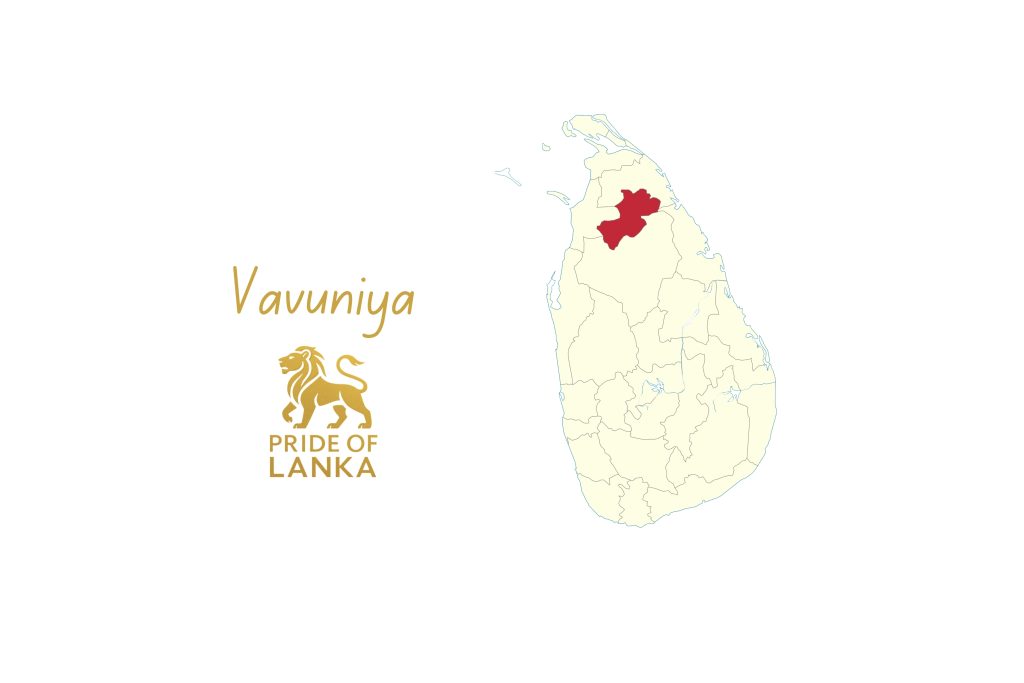
Vavuniya District stands at a unique and strategic crossroads in Sri Lanka’s geography and history. Located at the southern edge of the Northern Province, Vavuniya has long served as the main land gateway between the North and the rest of the island, a place of passage, exchange, trade, and connection.
More than a transit town, Vavuniya is a district with its own deep roots in agriculture, water management, and community life, and a growing role in the economic and social integration of post conflict Sri Lanka.
A Landscape of Tanks, Fields, and Dry Zone Plains
Vavuniya lies in Sri Lanka’s dry zone and is shaped by wide plains, tanks, and irrigation based farming systems. Life here has always depended on careful management of water, and the district is supported by a network of reservoirs and canals that sustain paddy cultivation and other field crops.
Agriculture remains the backbone of the district’s economy, with paddy, vegetables, and chena cultivation supporting a largely rural population.
A Historic Corridor of Movement
For centuries, Vavuniya has been a corridor linking the northern peninsula and the Vanni region with the central and southern parts of the island. Traders, pilgrims, administrators, and armies have all passed through this region, giving it a long history as a place of movement rather than isolation.
In modern times, this role became even more pronounced, as Vavuniya functioned as the main road and rail gateway to the North.
Communities and Cultural Balance
Vavuniya is one of Sri Lanka’s more mixed districts in the Northern region. Tamils, Sinhalese, Muslims, and other communities live and work here, making it a place of everyday coexistence and practical interdependence.
This diversity is reflected in the district’s temples, churches, mosques, and kovils, and in its markets, schools, and public spaces.
Conflict, Disruption, and Recovery
Like much of the Northern Province, Vavuniya experienced years of disruption, displacement, and economic stagnation during the conflict. Its position as a border and transit district gave it a particularly complex and difficult role during that period.
Since the end of the conflict, Vavuniya has been steadily rebuilding. Roads, railways, schools, hospitals, and public services have been restored and improved. Trade and transport have revived, and the district is once again playing its natural role as a connector between regions.
Education, Services, and Regional Importance
Vavuniya today serves as a major administrative, educational, and service center for a wide area of the Northern Province. The University of Jaffna’s Vavuniya campus and other educational and training institutions have strengthened its role as a regional knowledge hub.
Hospitals, markets, and government offices in Vavuniya serve not only the district itself, but also neighboring areas of the Vanni.
Economy and Future Potential
Beyond agriculture and trade, Vavuniya has growing potential in:
- Agro processing and value added agriculture
- Logistics, warehousing, and regional distribution
- Education and training services
- Small and medium enterprise development
- Renewable energy, especially solar
Its location makes it a natural hub for regional integration and economic circulation in the Northern region.
Pride of Lanka Perspective
Vavuniya is a district of connection. It links places, people, and possibilities.
It reminds Sri Lanka that unity is not built only in capitals and conferences, but also in everyday towns where roads meet, trains stop, markets open, and communities mix.
In celebrating Sri Lankan excellence, Vavuniya stands as the quiet but essential hinge between North and South, and as a symbol of how geography can become a bridge rather than a boundary.