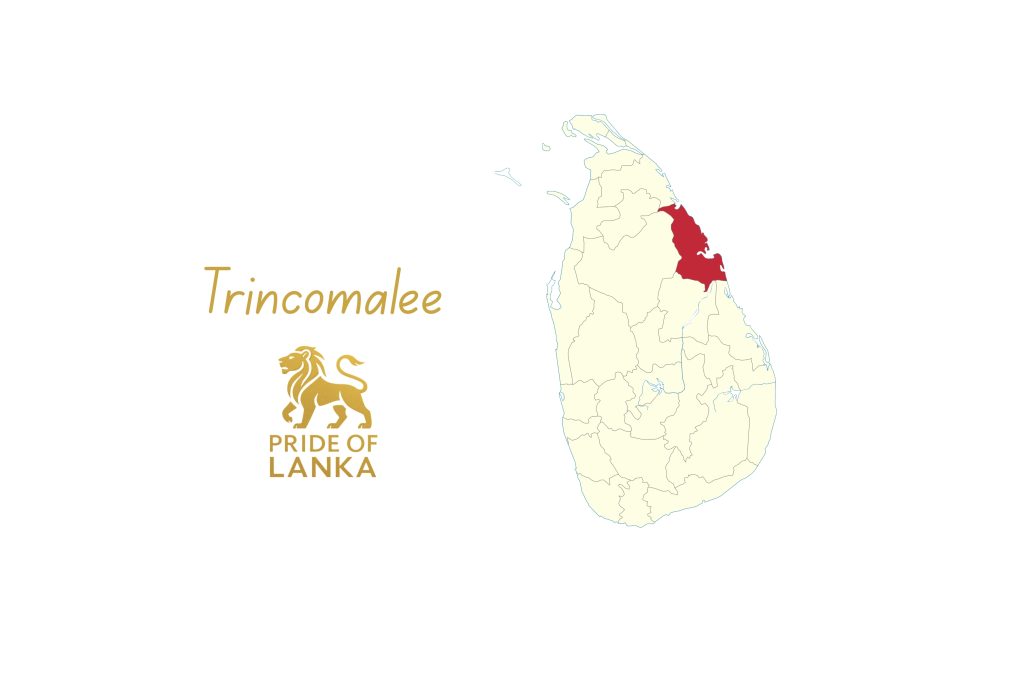
Trincomalee District stands on Sri Lanka’s north eastern coast as one of the most geographically blessed and historically significant regions in the Indian Ocean. Known for its magnificent natural harbor, ancient temples, and pristine beaches, Trincomalee has for centuries been a meeting point of trade, faith, empire, and strategy.
More than just a beautiful coastal district, Trincomalee is a place where Sri Lanka’s past, present, and future converge with unusual clarity.
One of the World’s Great Natural Harbors
At the heart of Trincomalee’s global importance is its harbor. Trincomalee Harbour is one of the largest and deepest natural harbors in the world, protected by headlands and capable of sheltering entire fleets.
For centuries, this harbor has attracted the attention of regional and global powers, from ancient traders to European empires and modern strategic planners. Its position on major Indian Ocean sea lanes makes it one of Sri Lanka’s most valuable strategic assets.
Even today, Trincomalee remains central to discussions about maritime security, trade, energy, and regional connectivity.
A City Older Than Many Empires
Trincomalee is one of the oldest continuously inhabited places in Sri Lanka. The Koneswaram Temple, perched dramatically on Swami Rock, is one of the most sacred Hindu temples in the island and has been a major pilgrimage site for centuries.
The district also contains important Buddhist heritage, including the Girihandu Seya, believed to be one of the earliest stupas in Sri Lanka, and many ancient sites that show Trincomalee’s role in early Sri Lankan civilization.
Christian and Islamic heritage sites further reflect the district’s long history as a crossroads of cultures and faiths.
Beaches, Bays, and Natural Beauty
Trincomalee’s coastline is among the most beautiful and unspoiled in the country. Beaches such as Nilaveli, Uppuveli, and Marble Beach are known for their white sands, clear waters, and coral reefs.
The surrounding seas are rich in marine life, and Trincomalee is one of the few places in Sri Lanka where whale and dolphin watching is a regular and reliable attraction.
Inland, forests, tanks, and wetlands add to the district’s ecological diversity.
A District of Many Communities
Trincomalee is one of Sri Lanka’s most multi ethnic and multi religious districts. Tamils, Sinhalese, Muslims, and other communities have lived here for generations, shaping a complex social and cultural landscape.
This diversity is reflected in the district’s languages, religious sites, food traditions, and everyday life, making Trincomalee a true microcosm of Sri Lanka itself.
Agriculture, Fisheries, and Daily Life
Beyond its port and tourism, Trincomalee is also a productive rural district. Paddy cultivation, fishing, and lagoon based livelihoods support a large part of the population.
Irrigation systems and tanks continue the ancient tradition of dry zone agriculture, while the sea provides both food and income for coastal communities.
From Conflict to Opportunity
Like much of the Eastern and Northern regions, Trincomalee experienced difficult years during the conflict. Today, the district is steadily reclaiming its place as a center of tourism, trade, and strategic development.
With careful planning, Trincomalee has the potential to become:
- A major maritime and logistics hub
- A center for energy and port related industries
- A leading coastal and marine tourism destination
- A bridge between Sri Lanka’s eastern interior and the Indian Ocean economy
Pride of Lanka Perspective
Trincomalee is not just a harbor. It is a horizon.
It represents Sri Lanka’s outward face to the Indian Ocean, its deep roots in Asian civilization, and its vast untapped maritime potential.
In celebrating Sri Lankan excellence, Trincomalee stands as a reminder that geography is destiny, and that few places on the island carry as much promise, history, and strategic value as this great blue gateway of the east.