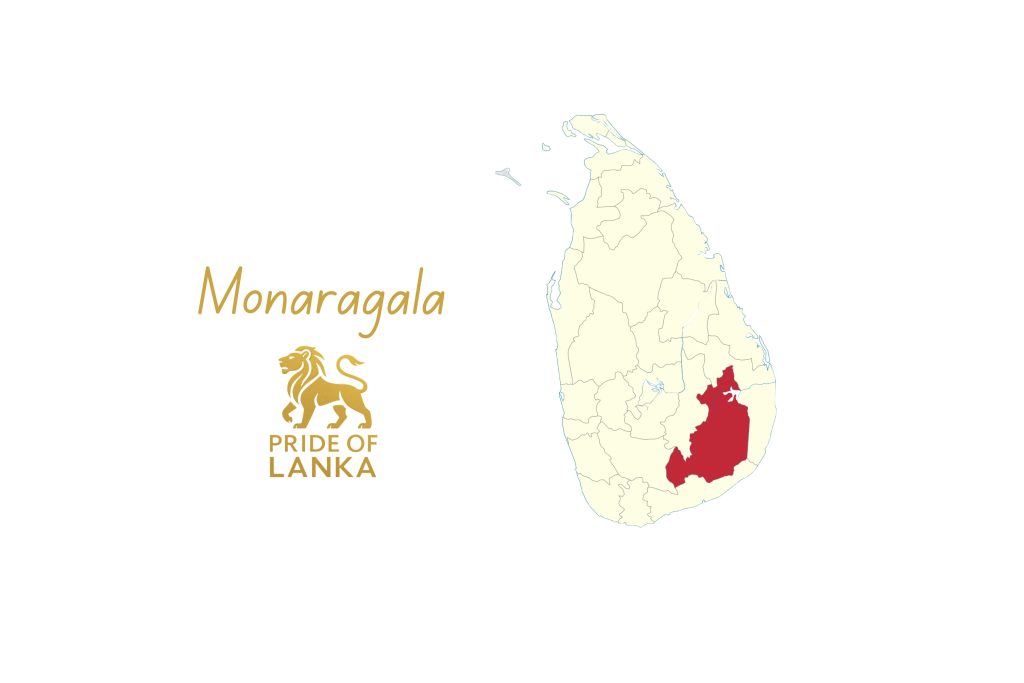
Monaragala District stands as one of Sri Lanka’s largest and most resource-rich regions, a vast land of forests, rivers, tanks, and farming communities stretching across the south-eastern interior of the island. Often described as part of the modern Uva and Ruhuna frontier, Monaragala is a district of space, opportunity, and deep rural strength.
Though less urbanized than many other regions, Monaragala plays a crucial role in Sri Lanka’s agriculture, mineral resources, and long-term development potential.
A Landscape of Scale and Natural Wealth
Monaragala is one of the largest districts in Sri Lanka by area. Its landscape includes dry-zone plains, forest reserves, rocky outcrops, and river basins that feed into the Menik Ganga, Kirindi Oya, and other important water systems.
Large parts of the district remain forested, making it one of the country’s key regions for biodiversity, wildlife corridors, and environmental conservation. The district borders major natural areas such as Yala and Gal Oya ecosystems.
Agriculture and the Rural Economy
Agriculture is the backbone of Monaragala’s economy. The district is a major producer of paddy, maize, sugarcane, vegetables, and fruits, supplying markets across the country.
Chena cultivation and tank-based irrigation systems continue to shape rural life, following patterns that go back centuries. In recent years, there has also been growth in commercial agriculture and agri-based industries.
The district is also known for its mineral resources, especially phosphate and other industrial minerals, adding another dimension to its economic importance.
A Land of Ancient Roots
Monaragala contains some of Sri Lanka’s most impressive ancient sites. The Maligawila Buddha statue, one of the tallest free-standing ancient Buddha statues in the island, stands as a testament to the district’s importance in the ancient Ruhuna civilization.
Nearby sites such as Buduruwagala, with its remarkable rock-cut Buddha images, show that this region was once a major religious and cultural zone, not a remote periphery.
Communities and Living Traditions
Monaragala is home to predominantly rural communities, including Sinhalese, Tamil, and Vedda populations in some areas, preserving unique cultural traditions, knowledge of forests, and ways of life closely connected to nature.
Village life, tank systems, temples, and seasonal farming cycles continue to shape the district’s social structure.
Infrastructure and the Opening of the Frontier
For much of its history, Monaragala remained relatively isolated due to its size and terrain. In recent decades, improved roads, irrigation schemes, and rural development programs have begun to integrate the district more closely with the rest of the country.
Towns such as Wellawaya, Bibile, and Monaragala now serve as important regional centers for trade, services, and administration.
Tourism, Nature, and Future Potential
Monaragala has strong and largely untapped potential in:
- Eco and wildlife tourism
- Cultural and archaeological tourism
- Agro and rural experience tourism
- Renewable energy, especially solar
- Mineral-based and agro-processing industries
Its wide open spaces and natural landscapes offer a different vision of Sri Lanka, far from crowded coastal or urban zones.
Pride of Lanka Perspective
Monaragala is a district of horizons. It represents space, patience, and the long view of development.
It reminds Sri Lanka that national strength does not come only from ports and cities, but also from frontier lands that feed the country, protect its forests, and hold vast potential for the future.
In celebrating Sri Lankan excellence, Monaragala stands as a symbol of quiet abundance and the promise of what is yet to come.