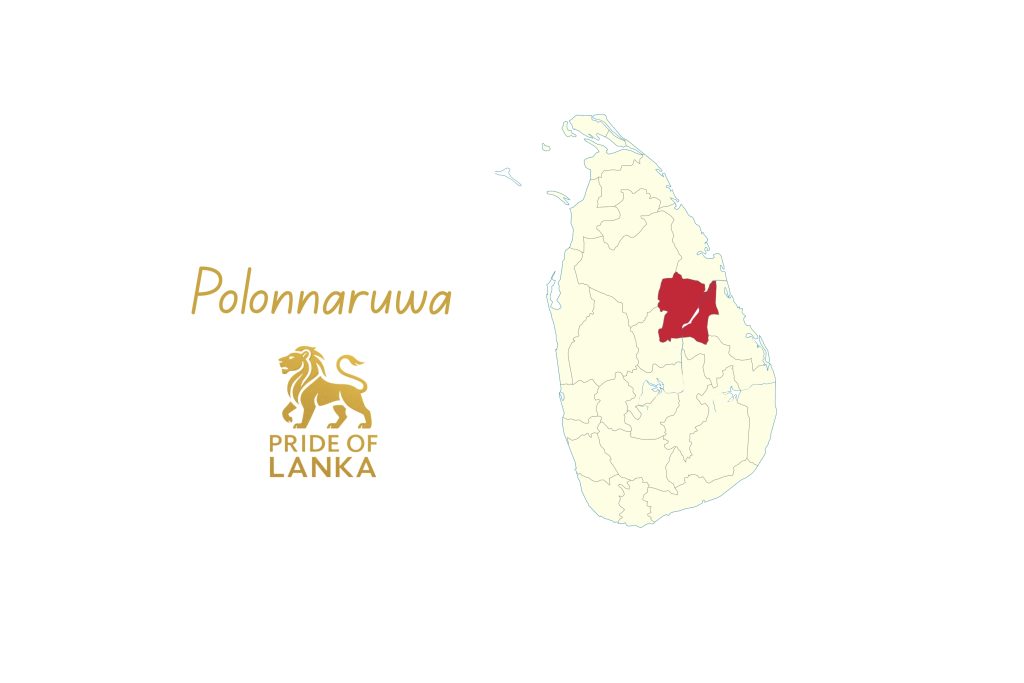
Polonnaruwa District stands as one of Sri Lanka’s most historically important and visually striking regions, a land where stone monuments, vast reservoirs, and carefully planned cities tell the story of a sophisticated medieval civilization. As the island’s second great capital after Anuradhapura, Polonnaruwa represents a golden age of engineering, governance, art, and Buddhist culture.
Today, Polonnaruwa is both a UNESCO World Heritage landscape and one of Sri Lanka’s most important agricultural districts, linking ancient wisdom with modern national needs.
The Capital of Kings and Builders
Polonnaruwa rose to prominence in the 11th and 12th centuries, especially under King Parakramabahu the Great, one of Sri Lanka’s greatest rulers and nation builders. His vision was clear and ambitious: “Let not even a drop of rainwater flow to the sea without serving mankind.”
Under this philosophy, Polonnaruwa became the heart of an extraordinary hydraulic and urban civilization, with planned streets, palaces, monasteries, hospitals, and vast irrigation works.
The ruins of the Royal Palace, the Council Chamber, the Quadrangle, and many other structures still reveal the scale and sophistication of this medieval capital.
The Sea of Parakrama and the Water Kingdom
The Parakrama Samudraya, one of the largest man-made reservoirs in Sri Lanka, dominates the landscape of Polonnaruwa. More than a tank, it is a symbol of a civilization that mastered water management in a dry zone environment.
Even today, this and other irrigation systems in the district continue to support large scale paddy cultivation, making Polonnaruwa one of the pillars of Sri Lanka’s food security.
The district is part of the great dry zone tank civilization that sustained the island for centuries and still does.
Gal Vihara and the Art of Stone
One of Polonnaruwa’s most celebrated treasures is the Gal Vihara, a group of colossal Buddha statues carved directly into a granite rock face. The standing, seated, and reclining figures are considered among the finest achievements of Buddhist rock sculpture anywhere in Asia.
Together with sites such as Lankatilaka, Tivanka Image House, and the Vatadage, they show a refined artistic culture combined with deep spiritual life.
A Living Agricultural Heartland
Beyond its ruins, Polonnaruwa is a living rural district of villages, tanks, and cultivated fields. Paddy is the dominant crop, and the district is one of Sri Lanka’s largest rice producers.
The Mahaweli development scheme further strengthened Polonnaruwa’s role as a major settlement and agricultural region, bringing new communities, towns, and farming systems into the ancient landscape.
Communities and Continuity
Polonnaruwa today is home to diverse communities, mainly Sinhalese, with Tamil and Muslim populations as well, living in irrigation based farming settlements and townships.
The social structure of the district remains closely tied to agriculture, water management, temples, and cooperative village life, continuing patterns that are centuries old.
Tourism, Heritage, and Education
Polonnaruwa is one of Sri Lanka’s most important heritage tourism destinations, attracting visitors from around the world who come to experience its monumental ruins and serene landscapes.
The district has strong potential in:
- Cultural and archaeological tourism
- Agro based industries and food processing
- Heritage conservation and research
- Eco and rural tourism
- Education related to history, archaeology, and water management
Pride of Lanka Perspective
Polonnaruwa is not just a city of stones. It is a lesson carved into the earth about how a civilization can live with water, land, and purpose.
It shows Sri Lanka at one of its highest moments of creativity, discipline, and vision, and reminds the nation that greatness is built through planning, patience, and respect for nature.
In celebrating Sri Lankan excellence, Polonnaruwa stands as a monument to what Sri Lanka has achieved before and what it can achieve again.