
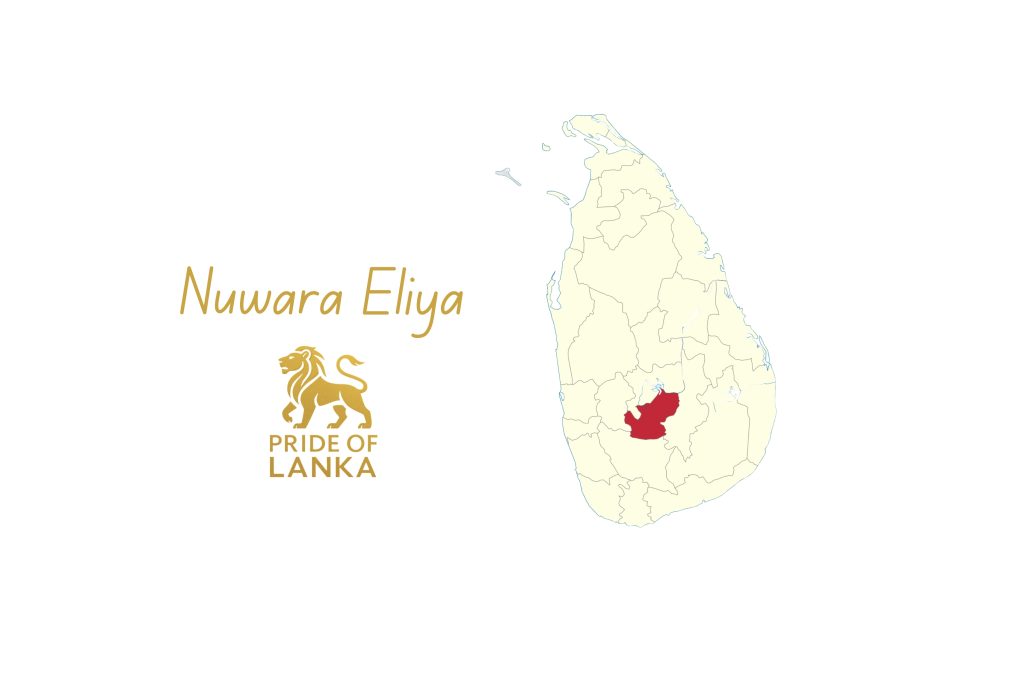
Nuwara Eliya District stands at the highest elevations of Sri Lanka, where cool winds, misty mountains, and rolling tea estates create a landscape unlike any other part of the island. Often called “Little England” because of its colonial-era architecture and climate, Nuwara Eliya is both a living highland resort and the very heart of Sri Lanka’s tea civilization.
More than a tourist destination, Nuwara Eliya is a district that shapes the country’s economy, environment, and identity through tea, water, and mountain ecosystems.
A Landscape Above the Clouds
Nuwara Eliya contains Sri Lanka’s highest peaks, including Pidurutalagala, the tallest mountain in the country, and lies close to the Horton Plains plateau and World’s End, one of the island’s most dramatic natural viewpoints.
The district is the source of several major rivers, including the Mahaweli, Kelani, and Kalu Ganga systems, making it one of the most important water catchment regions in Sri Lanka. In many ways, Nuwara Eliya is the island’s natural water tower.
Its cool climate, open grasslands, cloud forests, and cultivated hillsides give the district a unique ecological and visual character.
The Birthplace of Sri Lanka’s Tea Empire
Nuwara Eliya is the symbolic and practical heart of Sri Lanka’s tea industry. The British developed the highlands into one of the world’s great tea producing regions, and today the name “Ceylon Tea” is inseparable from the image of misty Nuwara Eliya estates.
The district produces some of the world’s finest high grown teas, known for their light color, delicate aroma, and refined flavor. Tea plantations, factories, and estate communities dominate the economic and social life of the region.
A Society Built Around the Plantations
Nuwara Eliya is home to large plantation communities, especially Indian-origin Tamil workers and their families, whose labor over generations built one of Sri Lanka’s most valuable export industries.
Alongside them live Sinhalese and Muslim communities, creating a multi-ethnic highland society shaped by estate life, market towns, and hill country culture.
The social history of the district is inseparable from the story of labor, migration, and the building of modern Sri Lanka’s plantation economy.
Colonial Towns and Highland Heritage
The town of Nuwara Eliya itself retains a distinctive colonial character, with old bungalows, the post office, the racecourse, and Gregory Lake forming a landscape that feels closer to Europe than to the tropics.
At the same time, the district also contains important religious sites, temples, churches, and kovils that reflect the spiritual life of its diverse population.
Nature, Farming, and Highland Agriculture
Beyond tea, Nuwara Eliya is also Sri Lanka’s main center for highland vegetable cultivation, supplying potatoes, carrots, leeks, and other cool climate crops to markets across the country.
The district’s ecosystems, especially Horton Plains and surrounding forests, are of enormous importance for biodiversity and environmental protection.
Tourism and the Highland Experience
Nuwara Eliya is one of Sri Lanka’s most popular tourism regions, known for:
- Scenic mountain landscapes and cool climate
- Tea estate tours and colonial heritage
- Horton Plains and World’s End
- Gregory Lake and highland gardens
- Hiking, nature travel, and wellness tourism
It offers a completely different experience from the island’s beaches and dry-zone plains.
Pride of Lanka Perspective
Nuwara Eliya is the roof of Sri Lanka and the soul of its tea story. It gives the country its water, one of its most famous exports, and some of its most beautiful landscapes.
It reminds Sri Lanka that nature, labor, and history are deeply connected, and that the country’s global image is often born in quiet, misty hills far from the ports and cities.
In celebrating Sri Lankan excellence, Nuwara Eliya stands as a symbol of refinement, endurance, and the highland heart of the island.