
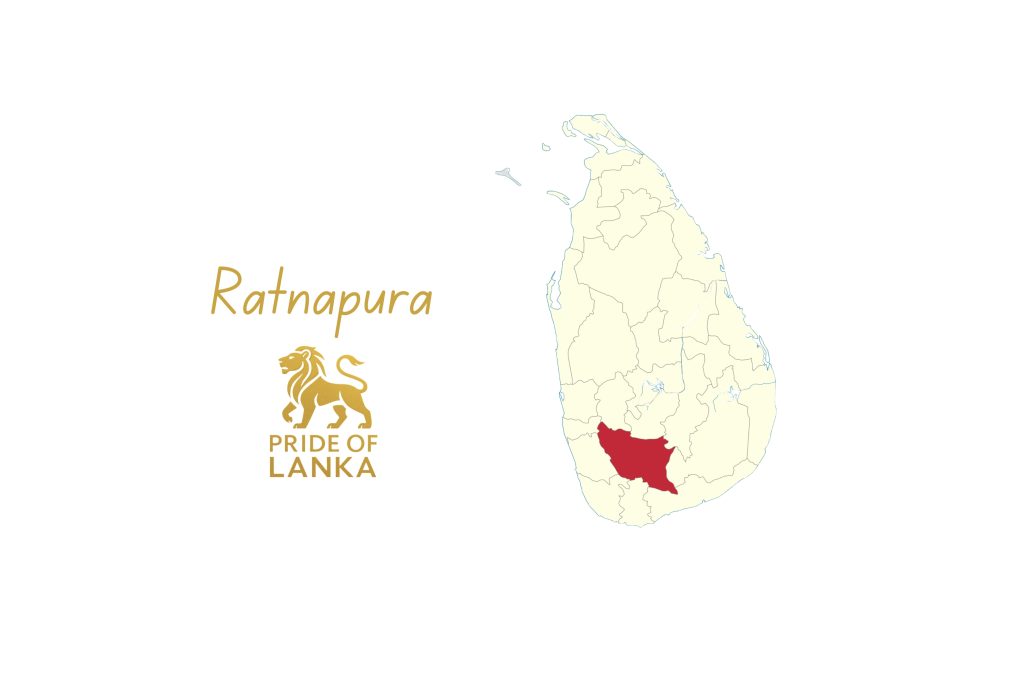
Ratnapura District stands at the southern edge of Sri Lanka’s central highlands, where rivers, rainforests, mountains, and deep alluvial plains come together to create one of the island’s most resource rich and historically famous regions. Known around the world as the “City of Gems”, Ratnapura has for over two thousand years been at the heart of Sri Lanka’s global reputation as Ratna Dweepa, the Island of Gems.
Today, Ratnapura is both a center of gem mining and trade and a gateway to some of Sri Lanka’s most important natural and spiritual landscapes.
The Land of Precious Stones
Ratnapura is the center of Sri Lanka’s gem industry. The district’s river valleys and alluvial plains have produced sapphires, rubies, cat’s eyes, alexandrites, and many other precious and semi precious stones that have found their way into royal crowns, museums, and private collections around the world.
Traditional gem mining methods, often carried out by hand, continue alongside more modern techniques, forming a unique blend of ancient practice and contemporary trade.
The gem trade has shaped the district’s economy, culture, and identity for centuries and continues to support thousands of families and businesses.
A Landscape of Rivers and Rain
Ratnapura lies in Sri Lanka’s wet zone and receives some of the highest rainfall in the country. Several major rivers, including the Kalu Ganga, originate or flow through the district, making it one of the island’s most water rich regions.
This abundance of water has made the land extremely fertile, supporting paddy cultivation, tea, rubber, and a wide range of other crops.
At the same time, the heavy rains also bring challenges, especially seasonal flooding, which has long been part of life in the district.
The Gateway to Sri Pada
Ratnapura is the main approach route to Sri Pada, also known as Adam’s Peak, one of Sri Lanka’s most sacred and spiritually significant mountains. Every year, hundreds of thousands of pilgrims from different faiths pass through the district on their journey to the summit.
This has made Ratnapura an important spiritual, cultural, and logistical hub during the pilgrimage season, linking faith, travel, and community life.
Forests, Mountains, and Biodiversity
The district borders some of Sri Lanka’s most important forest and conservation areas, including the Sinharaja forest region and parts of the Peak Wilderness Sanctuary. These ecosystems are among the richest in biodiversity in South Asia and play a crucial role in climate regulation and water conservation.
Ratnapura is therefore not only a land of gems, but also a guardian of some of the island’s most precious natural heritage.
Communities, Trade, and Tradition
Ratnapura is home to a mix of Sinhalese, Tamil, and Muslim communities, living across towns, villages, plantations, and mining areas. The district has a long tradition of trade, craftsmanship, and entrepreneurship, especially connected to gems and related industries.
Markets, workshops, and trading houses give the city a distinct commercial character shaped by centuries of dealing in precious stones.
Tourism, Industry, and Future Potential
Ratnapura has strong and growing potential in:
- Gem and heritage tourism
- Religious and pilgrimage tourism
- Eco and rainforest tourism
- Agro processing and plantation based industries
- Research and value addition in gemstones
With better infrastructure and careful planning, the district can further strengthen its role as both a global gem center and a nature based destination.
Pride of Lanka Perspective
Ratnapura is a district where the earth itself gives treasures. It reminds Sri Lanka that some of the country’s greatest wealth comes not from factories or ports, but from patient work in riverbeds, forests, and mountains.
It also shows how natural beauty, spiritual heritage, and economic tradition can exist together in a single landscape.
In celebrating Sri Lankan excellence, Ratnapura stands as the shining heart of the island’s gem story and a guardian of some of its most sacred and precious lands.