
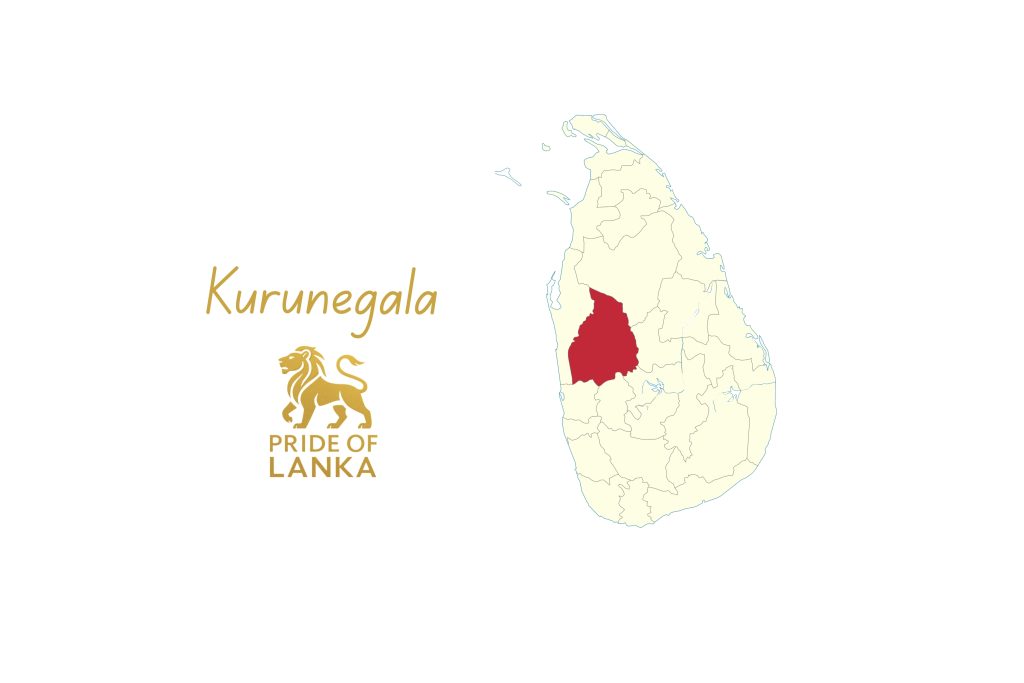
Kurunegala District stands as one of Sri Lanka’s most important and productive regions, a place where ancient kingdoms, massive irrigation works, and modern agriculture come together to sustain the country. Located in the North Western Province, Kurunegala is both a historic royal capital and one of the nation’s greatest food-producing areas.
Often called the “Rock City” because of the dramatic rocky outcrops that surround the town, Kurunegala is also widely known as one of the granaries of Sri Lanka.
A Capital of Ancient Kings
Kurunegala served as a royal capital in the 13th and 14th centuries and played a crucial role in the island’s political history during a period of transition and challenge. Kings such as Parakramabahu IV ruled from this region, and the district still bears traces of its royal past in temples, ruins, and place names.
The famous rock formations surrounding the city, such as Ethagala (Elephant Rock), Ibbagala (Tortoise Rock), and Aandagalla, have become iconic landmarks and give Kurunegala its unique identity.
The Heart of the Irrigation and Farming Civilization
Kurunegala lies within Sri Lanka’s great dry and intermediate zones and is supported by a vast network of tanks, canals, and irrigation systems, many of which trace their origins to ancient times.
The district is one of the country’s leading producers of paddy, coconut, vegetables, and other field crops. Together with the surrounding regions, Kurunegala forms the core of Sri Lanka’s coconut triangle and plays a decisive role in national food security.
A Landscape of Villages and Tanks
Kurunegala is a district of villages, tanks, and cultivated fields. The traditional tank-based village system remains very much alive here, demonstrating the continuity of Sri Lanka’s ancient water management culture.
This landscape supports not only agriculture, but also a way of life based on cooperation, seasonal rhythms, and close ties between people, land, and water.
People Who Shaped the Nation
Kurunegala and the wider North Western region have produced many influential political leaders, administrators, Buddhist monks, scholars, and cultural figures who have played major roles in Sri Lanka’s public life.
The district has also been a stronghold of rural political consciousness and grassroots leadership movements throughout modern Sri Lankan history.
Education, Trade, and Regional Connectivity
Kurunegala is a major regional hub, connecting the north, north central, central, and western parts of the country. Its central location has made it an important center for trade, transport, education, and public administration.
Institutions such as Wayamba University have strengthened the district’s role in higher education, agriculture, and regional development.
A District with Future Potential
Beyond its traditional strengths, Kurunegala has strong potential in:
- Agro-processing and food industries
- Dairy and livestock development
- Logistics and regional trade
- Renewable energy
- Small and medium enterprise growth
With the right investments, the district can further strengthen its role as both a food basket and a regional economic engine.
Pride of Lanka Perspective
Kurunegala is a district that feeds the nation and remembers its kings. It represents continuity, productivity, and the enduring strength of rural Sri Lanka.
It reminds us that the true foundations of the country lie in fertile fields, well-managed water, and communities that have sustained civilization for centuries.
In celebrating Sri Lankan excellence, Kurunegala stands as both a symbol of heritage and a pillar of national survival.