
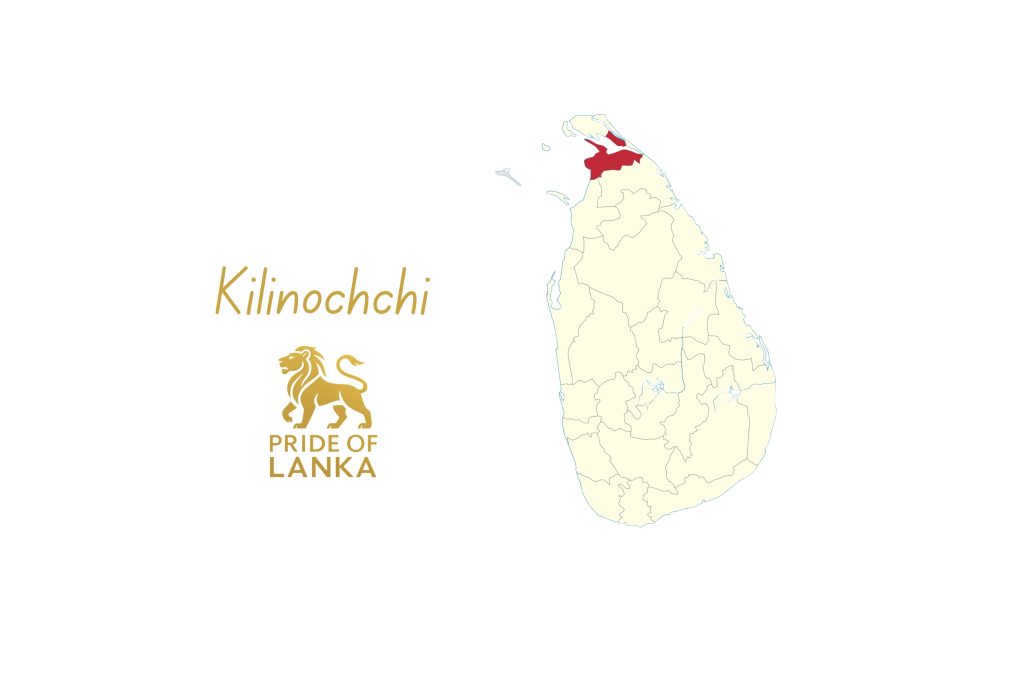
Kilinochchi District stands at the center of Sri Lanka’s Northern plains, a land defined by tanks, fields, perseverance, and renewal. Once known mainly for hardship and conflict, Kilinochchi today is steadily redefining itself as a district of agriculture, reconstruction, and quiet determination.
Geographically and symbolically, Kilinochchi occupies a central position in the Northern Province. It connects Jaffna to the Vanni heartland and serves as a key administrative and logistical hub for the wider region.
A Land Shaped by Water and Soil
Kilinochchi lies in Sri Lanka’s dry zone, where life has always depended on careful water management. The district is sustained by a network of tanks, canals, and irrigation systems, both ancient and modern, that support paddy cultivation and other crops.
The Iranamadu Tank, one of the largest reservoirs in the Northern Province, is the lifeline of the district. It irrigates vast areas of farmland and remains central to both agriculture and daily life.
Paddy, vegetables, and other field crops form the backbone of Kilinochchi’s rural economy, and agriculture continues to be the main source of livelihood for most families.
History, Disruption, and Recovery
Kilinochchi’s modern history is deeply marked by the long years of conflict, during which the district suffered immense destruction, displacement, and disruption of normal life. Entire communities were uprooted, infrastructure was damaged, and economic activity came to a standstill for many years.
Yet the story of Kilinochchi after the end of the conflict is one of rebuilding and return. Roads, schools, hospitals, and public institutions have been restored. Farmers have returned to their fields. Markets and small businesses are reappearing. Daily life, while still facing many challenges, is steadily normalizing.
Communities and Social Life
Kilinochchi is predominantly Tamil, with a strong rural and farming-based social structure. Village life, temples, schools, and cooperative institutions play a central role in community organization.
The district also carries a strong culture of mutual support and collective effort, shaped by years of shared hardship and the necessity of rebuilding together.
Education and the Next Generation
Rebuilding education has been one of the most important priorities in Kilinochchi. Schools and vocational training centers are gradually strengthening, and there is a growing focus on giving the younger generation skills that go beyond traditional agriculture, including technology, trades, and entrepreneurship.
The future of the district depends heavily on how successfully this new generation can combine education with local opportunities.
Economy and New Possibilities
While agriculture remains dominant, Kilinochchi has growing potential in:
- Agro-processing and value-added food production
- Livestock and dairy farming
- Renewable energy, especially solar
- Small and medium enterprises
- Logistics and regional trade within the Northern Province
Its central location in the Northern Province gives it strategic importance for regional distribution and services.
Memory, Dignity, and Forward Movement
Kilinochchi carries deep memories of suffering, but it is increasingly defined by dignity and forward movement rather than by the past alone. The district’s greatest asset is its people, who continue to rebuild their lives with patience, discipline, and quiet strength.
Pride of Lanka Perspective
Kilinochchi is not a symbol of despair. It is a symbol of recovery.
It shows Sri Lanka the true meaning of resilience, not in words, but in fields being replanted, schools reopening, and communities choosing to move forward despite everything they have endured.
In celebrating Sri Lankan excellence, Kilinochchi stands as a reminder that national progress is measured not only by skyscrapers and ports, but also by the successful return of ordinary life to places that once lost everything.