
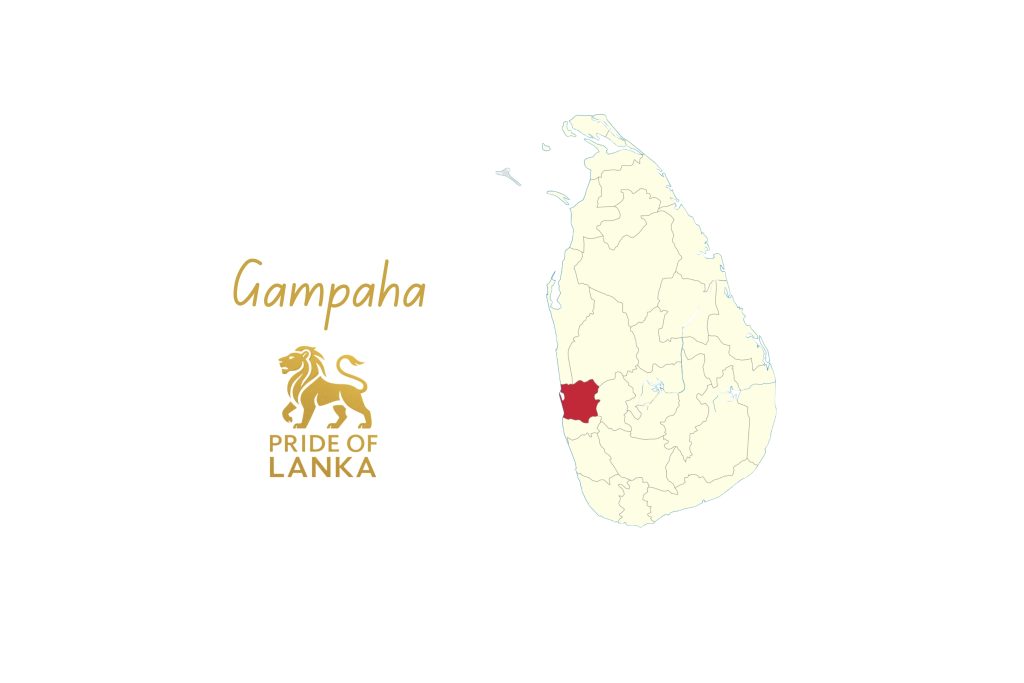
Gampaha District stands as one of Sri Lanka’s most dynamic and productive regions, a place where industry, agriculture, suburbs, and historic townships come together to form the backbone of the Western Province outside Colombo. Often described as the bridge between the capital and the rest of the country, Gampaha plays a critical role in Sri Lanka’s economy, workforce, and everyday life.
Today, Gampaha is one of the most populous districts in Sri Lanka and one of its most economically diversified, combining manufacturing, services, trade, agriculture, and residential development in a unique and powerful mix.
From Coconut Plantations to Modern Townships
Historically, much of Gampaha was part of Sri Lanka’s famous coconut-growing belt. Even today, coconut cultivation remains an important feature of the district’s landscape and rural economy.
Over the past several decades, towns such as Negombo, Ja-Ela, Wattala, Kelaniya, Kiribathgoda, Kadawatha, and Gampaha have transformed into major urban and suburban centers, driven by their proximity to Colombo, the port, and the international airport.
The district’s location, with the Bandaranaike International Airport in Katunayake, has made it a strategic logistics, tourism, and industrial hub.
The Industrial Powerhouse of the Western Province
Gampaha is one of Sri Lanka’s most important industrial districts. The Katunayake Export Processing Zone, one of the country’s earliest and largest industrial zones, has played a decisive role in Sri Lanka’s export-oriented manufacturing sector, especially in garments, electronics, and light engineering.
In addition, hundreds of factories, warehouses, and logistics centers across the district support national and international supply chains. Thousands of families across Sri Lanka depend directly or indirectly on employment generated in Gampaha.
A District of Faith, Learning, and Heritage
Gampaha is also rich in religious and cultural heritage. Sites such as the Kelaniya Raja Maha Viharaya, one of the most sacred Buddhist temples in the country, attract pilgrims from across Sri Lanka throughout the year.
Negombo stands out as a historic center of Sri Lankan Catholic life, often called “Little Rome” because of its churches, seminaries, and strong Christian traditions dating back to the Portuguese period.
The district also hosts many important schools, universities, and training institutes, making it one of the country’s major education corridors.
The People Who Shaped Modern Sri Lanka
Gampaha and its surrounding towns have produced many of Sri Lanka’s most influential political leaders, administrators, entrepreneurs, artists, and sportsmen. Due to its proximity to the capital and its large population, the district has played a decisive role in shaping electoral politics, trade union movements, business leadership, and social change in modern Sri Lanka.
Coast, Lagoons, and Natural Spaces
The western coastline of Gampaha, especially around Negombo, is famous for its fishing industry, lagoon systems, and long sandy beaches. The Negombo Lagoon supports one of the country’s most important fishing communities and fish markets, supplying seafood to Colombo and beyond.
Inland, the district also contains rivers, wetlands, and green pockets that continue to support agriculture and biodiversity, even as urbanization expands.
A Suburban Future with National Importance
Gampaha’s future is closely linked to Sri Lanka’s urban and economic transformation. It is set to play a leading role in:
- Industrial expansion and logistics
- Suburban housing and urban development
- Airport-centered trade and tourism
- Education, training, and workforce development
- Small and medium enterprise growth
The challenge for the district is to manage growth sustainably while protecting living standards, transport systems, and environmental quality.
Pride of Lanka Perspective
Gampaha is where modern Sri Lanka works, builds, and moves. It may not always be in the spotlight like Colombo, but without Gampaha, the country’s economy, logistics, and daily life would not function as they do.
It represents the strength of the ordinary Sri Lankan workforce, the power of industry, and the importance of well-connected, productive regions in building national prosperity.
In celebrating Sri Lankan excellence, Gampaha stands as a reminder that progress is not made only in capital cities, but also in the districts that quietly carry the nation forward every day.