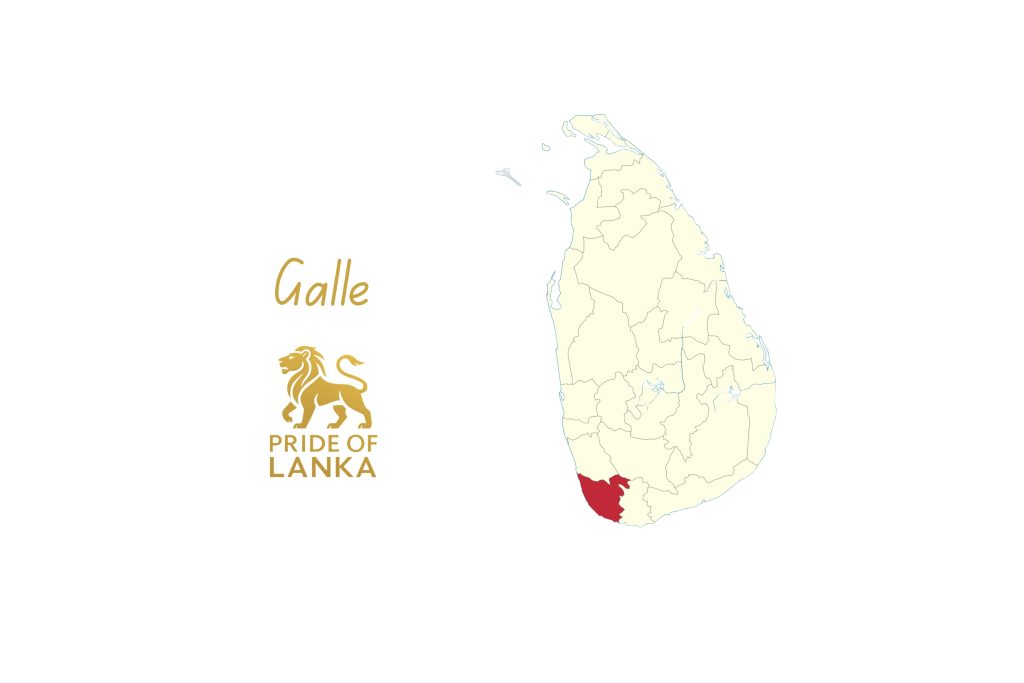
Galle is one of Sri Lanka’s most beautiful and historically layered districts, a place where the Indian Ocean, colonial heritage, maritime trade, and southern culture come together to form one of the country’s most distinctive identities. For centuries, Galle has served as Sri Lanka’s principal southern gateway to the world, long before Colombo rose as the island’s main port. Today, Galle District stands as a UNESCO World Heritage region, a major tourism hub, and a cultural capital of the Southern Province, blending living history with a vibrant contemporary life.
From Ancient Port to World Heritage City
Long before European arrival, Galle was a thriving port known to Arab, Persian, Greek, and Chinese traders. Many historians believe it was the ancient port of “Tarshish” mentioned in classical and biblical sources, famous for gems, spices, and ivory.
The Portuguese captured Galle in the 16th century, the Dutch later transformed it into a heavily fortified city, and the British added further administrative and architectural layers. The result is the Galle Fort, today one of the best preserved colonial fortifications in Asia and a UNESCO World Heritage Site.
Within its ramparts, cobbled streets, churches, mosques, old Dutch houses, museums, and boutique hotels create a unique urban landscape where history is not displayed in isolation but lived every day.
The Ocean and the Southern Maritime Culture
Galle’s identity is inseparable from the sea. Its coastline is dotted with fishing villages, natural harbors, and coral-rich waters. The southern maritime culture, with its fishing traditions, boat-building skills, and ocean-based livelihoods, remains a living heritage.
The Galle Harbour, once Sri Lanka’s main international port, played a decisive role in connecting the island to the Indian Ocean trade networks for over a thousand years.
Nearby beaches such as Unawatuna, Hikkaduwa, and Koggala have become world-famous tourism destinations, known for swimming, diving, coral reefs, and relaxed coastal life.
A Cradle of Southern Arts and Learning
Galle and the wider southern region have long been a cultural powerhouse of Sri Lanka. The district has produced some of the country’s most influential writers, poets, artists, journalists, and scholars, shaping modern Sinhala literature, theatre, and journalism.
Institutions such as the University of Ruhuna and many historic schools have strengthened Galle’s reputation as a center of learning and intellectual life in southern Sri Lanka.
People Who Shaped the Nation
Galle District has given Sri Lanka many prominent political leaders, jurists, scholars, artists, and public intellectuals who have played decisive roles in the country’s modern history, independence movement, and cultural renaissance.
The southern political consciousness, often associated with strong civic engagement and public debate, has deep roots in the social life of Galle and the surrounding areas.
Nature, Inland Landscapes, and Rural Life
Beyond the famous fort and beaches, Galle District includes rich rural landscapes, rivers, cinnamon and tea growing areas, and wetland ecosystems. The district represents a balanced mix of urban heritage zones, coastal tourism belts, and traditional village life.
This diversity makes Galle not only a tourist showcase, but also a productive agricultural and artisanal region.
A Modern Tourism and Heritage Economy
Today, Galle is one of Sri Lanka’s most important tourism and heritage economy centers. The district has become a global destination for:
- Heritage and cultural tourism
- Beach and leisure tourism
- Diving and marine tourism
- Boutique hotels and architectural conservation
- Creative industries and crafts
The challenge and opportunity for Galle is to balance growth with conservation, ensuring that its historic character and coastal ecosystems are preserved for future generations.
Pride of Lanka Perspective
Galle is where Sri Lanka’s past meets the horizon. It is a city built by the ocean, shaped by global encounters, and refined by centuries of cultural exchange.
It shows how Sri Lanka can turn heritage into living value, history into everyday life, and geography into global connection.
In celebrating Sri Lankan excellence, Galle stands as a shining example of how identity, beauty, and history can coexist with modern ambition.