
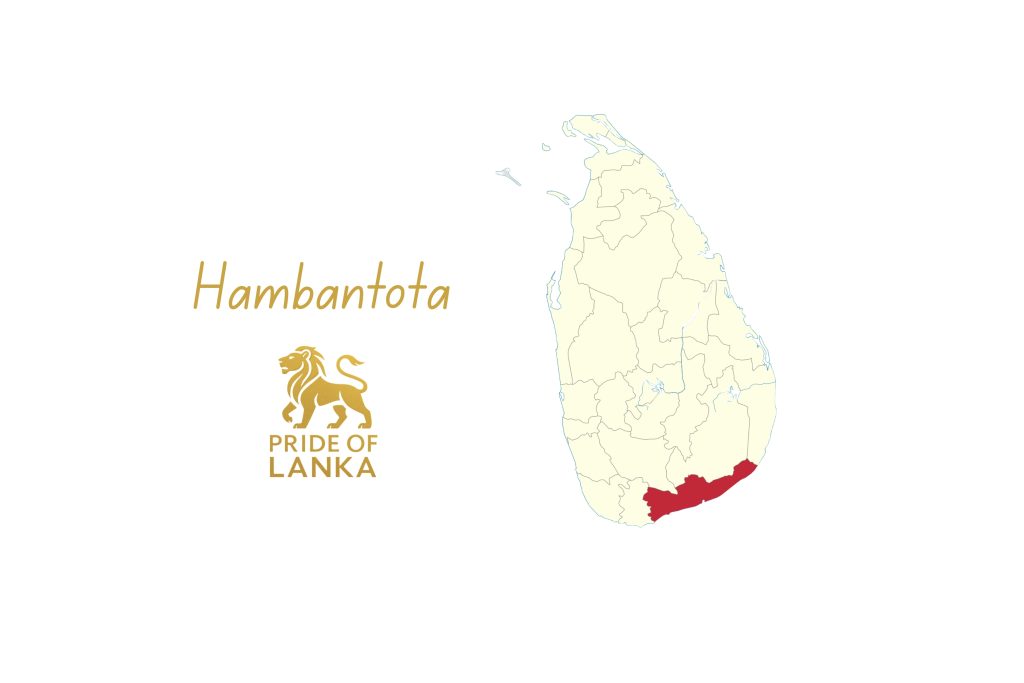
Hambantota District stands at the southern edge of Sri Lanka, where history, dry-zone landscapes, wildlife, and the Indian Ocean come together to form one of the country’s most strategic and fast-evolving regions. Long known as part of the ancient Ruhuna kingdom, Hambantota today is both a land of deep heritage and a symbol of Sri Lanka’s future-oriented development ambitions.
Often misunderstood as only a dry and sparsely populated region, Hambantota in fact carries enormous importance in Sri Lanka’s civilizational story, food systems, conservation efforts, and maritime strategy.
A Land Rooted in Ancient Ruhuna
Hambantota is historically part of Ruhuna, one of the three great ancient regions of Sri Lanka. This area played a crucial role in the rise of King Dutugemunu and the unification of the island.
The district is rich in archaeological and religious heritage. Sites such as Tissamaharama Raja Maha Viharaya, Kirinda Viharaya, and Sithulpawwa Rajamaha Viharaya reflect a continuous Buddhist civilization stretching back more than two thousand years.
Tissamaharama in particular was one of the great cities of ancient Ruhuna and remains one of the most sacred and historically important religious centers in southern Sri Lanka.
Nature, Wildlife, and the Dry Zone Landscape
Hambantota is one of Sri Lanka’s most important regions for wildlife and nature conservation. The district borders or contains several globally known protected areas, including Yala National Park, Bundala National Park, and Lunugamvehera National Park.
Bundala is a UNESCO-designated biosphere reserve and a major wetland for migratory birds, while Yala is one of the most famous wildlife parks in Asia, known especially for its leopard population.
The landscape of Hambantota, with its scrub forests, tanks, salt pans, and open plains, represents the classic dry-zone ecology of Sri Lanka.
Agriculture, Fisheries, and Salt
Despite its dry climate, Hambantota has long supported agriculture through tanks and irrigation systems, continuing the ancient Ruhuna tradition of water management. Paddy, chena cultivation, and other dry-zone crops remain important to rural livelihoods.
The district is also famous for its salt industry, especially around the Hambantota salterns, which are among the largest in Sri Lanka and play a key role in national salt production.
Along the coast, fisheries and marine-based livelihoods support thousands of families and form an important part of the local economy.
From Southern Port to Global Shipping Routes
In modern times, Hambantota has gained international attention as a major infrastructure and logistics hub. The Hambantota Port, located close to one of the world’s busiest east-west shipping routes, has positioned the district as a strategic maritime point in the Indian Ocean.
Along with the port, the Mattala Rajapaksa International Airport and the surrounding industrial and logistics zones represent an ambitious attempt to transform Hambantota into a southern economic gateway for Sri Lanka.
While this transformation is still ongoing, there is no doubt that Hambantota’s geographic importance will continue to shape national and regional development strategies.
People and Cultural Life
Hambantota and the wider southern region have a strong tradition of rural culture, folk practices, religious festivals, and community life. The district has produced many public servants, administrators, artists, and political leaders who have played significant roles in modern Sri Lankan public life.
The people of Hambantota are widely known for their resilience, simplicity, and strong community bonds, shaped by generations of life in a challenging but beautiful environment.
Tourism and New Possibilities
Hambantota has enormous tourism potential, especially in:
- Wildlife and safari tourism
- Religious and heritage tourism
- Beach and eco-tourism
- Bird watching and nature travel
- Cultural and rural experience tourism
Areas such as Kirinda, Yala, Bundala, and the southern coastline already attract visitors from around the world, and there is still vast room for carefully planned, sustainable tourism development.
Pride of Lanka Perspective
Hambantota is a district of deep time and big horizons. It carries the legacy of ancient Ruhuna, the rhythms of dry-zone life, the richness of wildlife, and the ambitions of a nation looking outward to the seas.
It reminds Sri Lanka that development is not only about cities and comfort, but also about geography, patience, and long-term vision.
In celebrating Sri Lankan excellence, Hambantota stands as a symbol of endurance, strategic importance, and the quiet power of the deep south.