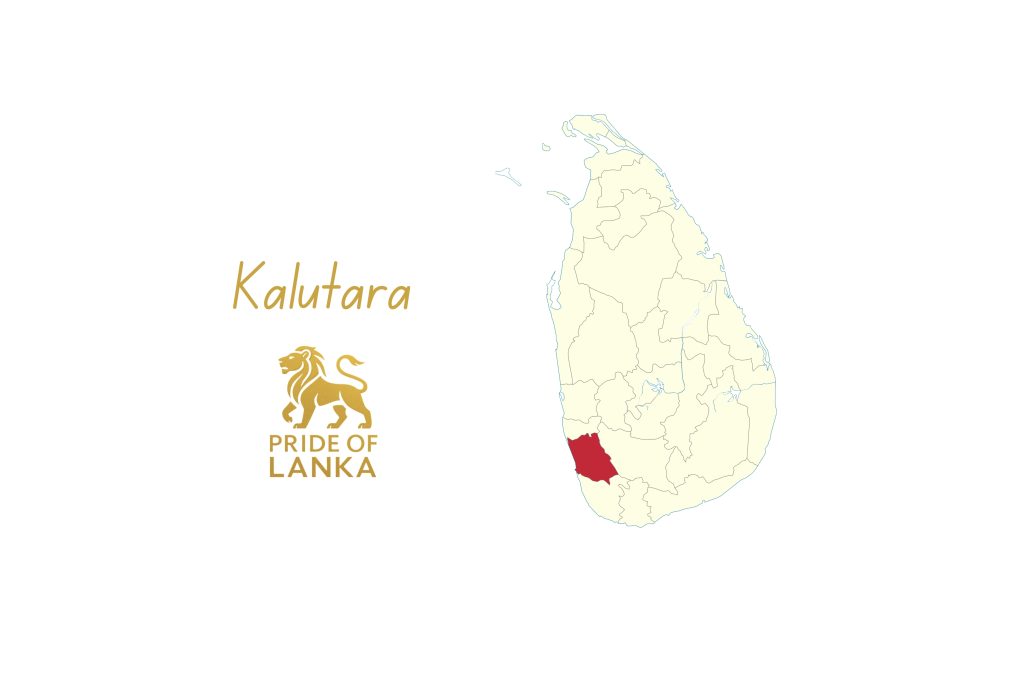
Kalutara District stands at a unique crossroads in Sri Lanka’s geography and history, where the Kalu Ganga meets the Indian Ocean and where the Western Province gradually opens into the Southern heartland. For centuries, Kalutara has served as a gateway district, linking Colombo and the western lowlands with the southern regions of the island.
Today, Kalutara is known for its coastal towns, religious landmarks, plantation heritage, and a quiet but important role in agriculture, industry, and tourism.
A District Shaped by Water
The Kalu Ganga, one of Sri Lanka’s major rivers, flows through the heart of Kalutara District and has shaped settlement, agriculture, and trade for generations. The river basin supports paddy fields, rubber plantations, and mixed agriculture, making the interior of the district both fertile and productive.
Along the coast, long beaches and estuaries define towns such as Kalutara, Beruwala, Aluthgama, and Bentota, creating a continuous belt of coastal life and tourism activity.
From Ancient Port to Colonial Corridor
Kalutara and Beruwala have long histories as ports and trading centers. Beruwala is traditionally regarded as one of the earliest Muslim settlements in Sri Lanka, with a history stretching back over a thousand years and a strong tradition of maritime trade.
During the colonial period, Kalutara became an important administrative and transport corridor between Colombo and the south, a role it continues to play today through the main coastal road and railway line.
Faith, Culture, and Living Heritage
One of Kalutara’s most famous landmarks is the Kalutara Bodhiya, one of the most sacred Buddhist sites in the country and a major pilgrimage destination. The large white stupa, visible from far along the coast and river, has become a defining symbol of the district.
The district is also rich in mosques, churches, kovils, and temples, reflecting its long tradition of religious coexistence and cultural diversity.
Plantations, Craft, and Rural Life
Kalutara was one of the heartlands of Sri Lanka’s rubber plantation industry, which played a major role in the country’s export economy during the 20th century. Even today, rubber remains an important crop in the district’s interior.
Kalutara is also famous for its handicrafts, especially the Kalutara mask tradition, which is closely linked to southern folk rituals, dance, and theatre.
The Tourism Coast of the West
Bentota, Beruwala, and the surrounding coastal belt have made Kalutara one of Sri Lanka’s most established tourism regions. The district is known for:
- Beach and resort tourism
- Water sports and river safaris on the Bentota and Kalu Ganga
- Wellness and Ayurveda tourism
- Cultural and craft-based tourism
This long experience in tourism has made Kalutara a key part of Sri Lanka’s hospitality industry.
People and Public Life
Kalutara and the wider southwestern region have produced many political leaders, public servants, artists, and professionals who have played important roles in national life. The district has also been an active center of social and political movements in modern Sri Lankan history.
Pride of Lanka Perspective
Kalutara is a district of flow and connection. It is where river meets sea, where west meets south, and where tradition meets modern movement.
It may not always seek the spotlight, but it quietly performs the essential role of linking regions, cultures, and economies.
In celebrating Sri Lankan excellence, Kalutara stands as a reminder that gateways matter just as much as destinations, and that continuity and connection are among a nation’s greatest strengths.